De-Risk Interconnection in Moments, not Months
De-Risk Interconnection in Moments, not Months
Nira Energy delivers transparent, ISO-accurate capacity and cost data that helps developers and transmission planners avoid false positives, reduce upgrade risks, and get to interconnection faster.
Nira Energy delivers transparent, ISO-accurate capacity and cost data that helps developers and transmission planners avoid false positives, reduce upgrade risks, and get to interconnection faster.
Trusted by









Our Impact
Our Impact
>$5B
Cost discrepancies identified for customers

100+
Developers Use
Nira Energy
700+
GW Projects Modeled
>97%
Accuracy in replication of ISO study results


ISO-Aligned Methodology
We replicate ERIS and NRIS studies, not FCITC approximations.

Built by Transmission Experts
Developed by engineers who’ve worked at ISOs, utilities, and top developers.

Proven at Scale
700+ GW modeled. $5B+ in ISO errors uncovered. 100+ developers trust us.
Products that scale clean energy projects
Products that scale clean energy projects
Products that scale clean energy projects
Nira Energy supports generation and load developers, transmission planning engineers, utility teams, and ISOs by streamlining study processes and enabling transparent, aligned decision-making across stakeholders.
Nira Energy supports generation and load developers, transmission planning engineers, utility teams, and ISOs by streamlining study processes and enabling transparent, aligned decision-making across stakeholders.
Nira Energy supports generation and load developers, transmission planning engineers, utility teams, and ISOs by streamlining study processes and enabling transparent, aligned decision-making across stakeholders.
Generation Developers
Generation Developers

Enable Generation Developers to make smarter siting and queue decisions

Increase success rates and reduce wasted capital

Directly accelerates projects reaching operation
Load Developers
Load Developers

Enable large loads to enter the queue more efficiently and transparently

Find build-ready sites with the fastest path to power

Evaluate impacts of competitor projects and de-risk future buildout
ISOs & Utilities
ISOs & Utilities

Accelerate model building, planning, and reliability studies
Scale the impact of your transmission team

Streamline long-term reliability planning with automated scenario analysis
Trusted by 100+ Energy Industry Players
Trusted by 100+ Clean Energy Leaders
"I spent a lot of time digging into Nira’s assumptions when I first started using their product and was impressed by their tool’s ability to closely mirror MISO system impact study outcomes. The level of detail provided in Nira’s results reduces my processing time while still maintaining consistent accuracy. My experience with the platform is positive - it has helped me run multiple complex analyses on a large portfolio and quickly generate actionable insights for my team."
Max Blackburn
Manager of Interconnection & Grid Analysis

“Interconnection studies are time-intensive and transmission teams are often resource-constrained. Nira enabled our transmission team to do 10x the work we can manage in-house, increasing how fast we move and helping improve the precision of our work product.”
Deral Danis
VP of Transmission
"What stood out to me about this team was how they framed their studies—providing multiple scopes that helped bookend the analysis and define a realistic range of outcomes. Their expertise came through not just in the rigor of the studies, but in the way they engage with questions and partner with us in figuring out complex issues. That kind of partnership, coupled with precision and clarity of analysis isn’t easy to find, and it gave me real confidence in the results."
Harriet Walsh
Senior Transmission Manager@ Orsted

"Nira has changed the game for prospecting. Before Nira, I would waste weeks vetting sites that had no transmission capacity. With Nira, all of that time is saved because I know which sites have capacity from the start."
Skye Mooney
Strategic Development @ AES

"We signed up for In-Queue and it allowed me to look into the results before MISO released data, and to find a large error in MISO modeling… A reduction of $20 million in costs by being ahead of it."
Mike Malguarnera
Director of Market Analytics and Interconnection @ BW Solar

"Previously, there was no way to look at transmission capacity across the number of POI’s we were interested in. Nira allows us to prospect for a much larger volume of sites at a faster rate than any alternative I’ve seen."
Timothy Walsh
VP, Development @ Doral Renewables, LLC

"I spent a lot of time digging into Nira’s assumptions when I first started using their product and was impressed by their tool’s ability to closely mirror MISO system impact study outcomes. The level of detail provided in Nira’s results reduces my processing time while still maintaining consistent accuracy. My experience with the platform is positive - it has helped me run multiple complex analyses on a large portfolio and quickly generate actionable insights for my team."
Max Blackburn
Manager of Interconnection & Grid Analysis
“Interconnection studies are time-intensive and transmission teams are often resource-constrained. Nira enabled our transmission team to do 10x the work we can manage in-house, increasing how fast we move and helping improve the precision of our work product.”
Deral Danis
VP of Transmission
"What stood out to me about this team was how they framed their studies—providing multiple scopes that helped bookend the analysis and define a realistic range of outcomes. Their expertise came through not just in the rigor of the studies, but in the way they engage with questions and partner with us in figuring out complex issues. That kind of partnership, coupled with precision and clarity of analysis isn’t easy to find, and it gave me real confidence in the results."
Harriet Walsh
Senior Transmission Manager@ Orsted
"Nira has changed the game for prospecting. Before Nira, I would waste weeks vetting sites that had no transmission capacity. With Nira, all of that time is saved because I know which sites have capacity from the start."
Skye Mooney
Strategic Development @ AES
"We signed up for In-Queue and it allowed me to look into the results before MISO released data, and to find a large error in MISO modeling… A reduction of $20 million in costs by being ahead of it."
Mike Malguarnera
Director of Market Analytics and Interconnection @ BW Solar
"Previously, there was no way to look at transmission capacity across the number of POI’s we were interested in. Nira allows us to prospect for a much larger volume of sites at a faster rate than any alternative I’ve seen."
Timothy Walsh
VP, Development @ Doral Renewables, LLC
"I spent a lot of time digging into Nira’s assumptions when I first started using their product and was impressed by their tool’s ability to closely mirror MISO system impact study outcomes. The level of detail provided in Nira’s results reduces my processing time while still maintaining consistent accuracy. My experience with the platform is positive - it has helped me run multiple complex analyses on a large portfolio and quickly generate actionable insights for my team."
Max Blackburn
Manager of Interconnection & Grid Analysis
“Interconnection studies are time-intensive and transmission teams are often resource-constrained. Nira enabled our transmission team to do 10x the work we can manage in-house, increasing how fast we move and helping improve the precision of our work product.”
Deral Danis
VP of Transmission
"What stood out to me about this team was how they framed their studies—providing multiple scopes that helped bookend the analysis and define a realistic range of outcomes. Their expertise came through not just in the rigor of the studies, but in the way they engage with questions and partner with us in figuring out complex issues. That kind of partnership, coupled with precision and clarity of analysis isn’t easy to find, and it gave me real confidence in the results."
Harriet Walsh
Senior Transmission Manager@ Orsted
"Nira has changed the game for prospecting. Before Nira, I would waste weeks vetting sites that had no transmission capacity. With Nira, all of that time is saved because I know which sites have capacity from the start."
Skye Mooney
Strategic Development @ AES
"We signed up for In-Queue and it allowed me to look into the results before MISO released data, and to find a large error in MISO modeling… A reduction of $20 million in costs by being ahead of it."
Mike Malguarnera
Director of Market Analytics and Interconnection @ BW Solar
"Previously, there was no way to look at transmission capacity across the number of POI’s we were interested in. Nira allows us to prospect for a much larger volume of sites at a faster rate than any alternative I’ve seen."
Timothy Walsh
VP, Development @ Doral Renewables, LLC
"I spent a lot of time digging into Nira’s assumptions when I first started using their product and was impressed by their tool’s ability to closely mirror MISO system impact study outcomes. The level of detail provided in Nira’s results reduces my processing time while still maintaining consistent accuracy. My experience with the platform is positive - it has helped me run multiple complex analyses on a large portfolio and quickly generate actionable insights for my team."
Max Blackburn
Manager of Interconnection & Grid Analysis
“Interconnection studies are time-intensive and transmission teams are often resource-constrained. Nira enabled our transmission team to do 10x the work we can manage in-house, increasing how fast we move and helping improve the precision of our work product.”
Deral Danis
VP of Transmission
"What stood out to me about this team was how they framed their studies—providing multiple scopes that helped bookend the analysis and define a realistic range of outcomes. Their expertise came through not just in the rigor of the studies, but in the way they engage with questions and partner with us in figuring out complex issues. That kind of partnership, coupled with precision and clarity of analysis isn’t easy to find, and it gave me real confidence in the results."
Harriet Walsh
Senior Transmission Manager@ Orsted
"Nira has changed the game for prospecting. Before Nira, I would waste weeks vetting sites that had no transmission capacity. With Nira, all of that time is saved because I know which sites have capacity from the start."
Skye Mooney
Strategic Development @ AES
"We signed up for In-Queue and it allowed me to look into the results before MISO released data, and to find a large error in MISO modeling… A reduction of $20 million in costs by being ahead of it."
Mike Malguarnera
Director of Market Analytics and Interconnection @ BW Solar
"Previously, there was no way to look at transmission capacity across the number of POI’s we were interested in. Nira allows us to prospect for a much larger volume of sites at a faster rate than any alternative I’ve seen."
Timothy Walsh
VP, Development @ Doral Renewables, LLC
"I spent a lot of time digging into Nira’s assumptions when I first started using their product and was impressed by their tool’s ability to closely mirror MISO system impact study outcomes. The level of detail provided in Nira’s results reduces my processing time while still maintaining consistent accuracy. My experience with the platform is positive - it has helped me run multiple complex analyses on a large portfolio and quickly generate actionable insights for my team."
Max Blackburn
Manager of Interconnection & Grid Analysis
“Interconnection studies are time-intensive and transmission teams are often resource-constrained. Nira enabled our transmission team to do 10x the work we can manage in-house, increasing how fast we move and helping improve the precision of our work product.”
Deral Danis
VP of Transmission
"What stood out to me about this team was how they framed their studies—providing multiple scopes that helped bookend the analysis and define a realistic range of outcomes. Their expertise came through not just in the rigor of the studies, but in the way they engage with questions and partner with us in figuring out complex issues. That kind of partnership, coupled with precision and clarity of analysis isn’t easy to find, and it gave me real confidence in the results."
Harriet Walsh
Senior Transmission Manager@ Orsted
"Nira has changed the game for prospecting. Before Nira, I would waste weeks vetting sites that had no transmission capacity. With Nira, all of that time is saved because I know which sites have capacity from the start."
Skye Mooney
Strategic Development @ AES
"We signed up for In-Queue and it allowed me to look into the results before MISO released data, and to find a large error in MISO modeling… A reduction of $20 million in costs by being ahead of it."
Mike Malguarnera
Director of Market Analytics and Interconnection @ BW Solar
"Previously, there was no way to look at transmission capacity across the number of POI’s we were interested in. Nira allows us to prospect for a much larger volume of sites at a faster rate than any alternative I’ve seen."
Timothy Walsh
VP, Development @ Doral Renewables, LLC
"I spent a lot of time digging into Nira’s assumptions when I first started using their product and was impressed by their tool’s ability to closely mirror MISO system impact study outcomes. The level of detail provided in Nira’s results reduces my processing time while still maintaining consistent accuracy. My experience with the platform is positive - it has helped me run multiple complex analyses on a large portfolio and quickly generate actionable insights for my team."
Max Blackburn
Manager of Interconnection & Grid Analysis
“Interconnection studies are time-intensive and transmission teams are often resource-constrained. Nira enabled our transmission team to do 10x the work we can manage in-house, increasing how fast we move and helping improve the precision of our work product.”
Deral Danis
VP of Transmission
"What stood out to me about this team was how they framed their studies—providing multiple scopes that helped bookend the analysis and define a realistic range of outcomes. Their expertise came through not just in the rigor of the studies, but in the way they engage with questions and partner with us in figuring out complex issues. That kind of partnership, coupled with precision and clarity of analysis isn’t easy to find, and it gave me real confidence in the results."
Harriet Walsh
Senior Transmission Manager@ Orsted
"Nira has changed the game for prospecting. Before Nira, I would waste weeks vetting sites that had no transmission capacity. With Nira, all of that time is saved because I know which sites have capacity from the start."
Skye Mooney
Strategic Development @ AES
"We signed up for In-Queue and it allowed me to look into the results before MISO released data, and to find a large error in MISO modeling… A reduction of $20 million in costs by being ahead of it."
Mike Malguarnera
Director of Market Analytics and Interconnection @ BW Solar
"Previously, there was no way to look at transmission capacity across the number of POI’s we were interested in. Nira allows us to prospect for a much larger volume of sites at a faster rate than any alternative I’ve seen."
Timothy Walsh
VP, Development @ Doral Renewables, LLC
"I spent a lot of time digging into Nira’s assumptions when I first started using their product and was impressed by their tool’s ability to closely mirror MISO system impact study outcomes. The level of detail provided in Nira’s results reduces my processing time while still maintaining consistent accuracy. My experience with the platform is positive - it has helped me run multiple complex analyses on a large portfolio and quickly generate actionable insights for my team."
Max Blackburn
Manager of Interconnection & Grid Analysis
“Interconnection studies are time-intensive and transmission teams are often resource-constrained. Nira enabled our transmission team to do 10x the work we can manage in-house, increasing how fast we move and helping improve the precision of our work product.”
Deral Danis
VP of Transmission
"What stood out to me about this team was how they framed their studies—providing multiple scopes that helped bookend the analysis and define a realistic range of outcomes. Their expertise came through not just in the rigor of the studies, but in the way they engage with questions and partner with us in figuring out complex issues. That kind of partnership, coupled with precision and clarity of analysis isn’t easy to find, and it gave me real confidence in the results."
Harriet Walsh
Senior Transmission Manager@ Orsted
"Nira has changed the game for prospecting. Before Nira, I would waste weeks vetting sites that had no transmission capacity. With Nira, all of that time is saved because I know which sites have capacity from the start."
Skye Mooney
Strategic Development @ AES
"We signed up for In-Queue and it allowed me to look into the results before MISO released data, and to find a large error in MISO modeling… A reduction of $20 million in costs by being ahead of it."
Mike Malguarnera
Director of Market Analytics and Interconnection @ BW Solar
"Previously, there was no way to look at transmission capacity across the number of POI’s we were interested in. Nira allows us to prospect for a much larger volume of sites at a faster rate than any alternative I’ve seen."
Timothy Walsh
VP, Development @ Doral Renewables, LLC
"I spent a lot of time digging into Nira’s assumptions when I first started using their product and was impressed by their tool’s ability to closely mirror MISO system impact study outcomes. The level of detail provided in Nira’s results reduces my processing time while still maintaining consistent accuracy. My experience with the platform is positive - it has helped me run multiple complex analyses on a large portfolio and quickly generate actionable insights for my team."
Max Blackburn
Manager of Interconnection & Grid Analysis
“Interconnection studies are time-intensive and transmission teams are often resource-constrained. Nira enabled our transmission team to do 10x the work we can manage in-house, increasing how fast we move and helping improve the precision of our work product.”
Deral Danis
VP of Transmission
"What stood out to me about this team was how they framed their studies—providing multiple scopes that helped bookend the analysis and define a realistic range of outcomes. Their expertise came through not just in the rigor of the studies, but in the way they engage with questions and partner with us in figuring out complex issues. That kind of partnership, coupled with precision and clarity of analysis isn’t easy to find, and it gave me real confidence in the results."
Harriet Walsh
Senior Transmission Manager@ Orsted
"Nira has changed the game for prospecting. Before Nira, I would waste weeks vetting sites that had no transmission capacity. With Nira, all of that time is saved because I know which sites have capacity from the start."
Skye Mooney
Strategic Development @ AES
"We signed up for In-Queue and it allowed me to look into the results before MISO released data, and to find a large error in MISO modeling… A reduction of $20 million in costs by being ahead of it."
Mike Malguarnera
Director of Market Analytics and Interconnection @ BW Solar
"Previously, there was no way to look at transmission capacity across the number of POI’s we were interested in. Nira allows us to prospect for a much larger volume of sites at a faster rate than any alternative I’ve seen."
Timothy Walsh
VP, Development @ Doral Renewables, LLC
"I spent a lot of time digging into Nira’s assumptions when I first started using their product and was impressed by their tool’s ability to closely mirror MISO system impact study outcomes. The level of detail provided in Nira’s results reduces my processing time while still maintaining consistent accuracy. My experience with the platform is positive - it has helped me run multiple complex analyses on a large portfolio and quickly generate actionable insights for my team."
Max Blackburn
Manager of Interconnection & Grid Analysis
“Interconnection studies are time-intensive and transmission teams are often resource-constrained. Nira enabled our transmission team to do 10x the work we can manage in-house, increasing how fast we move and helping improve the precision of our work product.”
Deral Danis
VP of Transmission
"What stood out to me about this team was how they framed their studies—providing multiple scopes that helped bookend the analysis and define a realistic range of outcomes. Their expertise came through not just in the rigor of the studies, but in the way they engage with questions and partner with us in figuring out complex issues. That kind of partnership, coupled with precision and clarity of analysis isn’t easy to find, and it gave me real confidence in the results."
Harriet Walsh
Senior Transmission Manager@ Orsted
Nira has changed the game for prospecting. Before Nira, I would waste weeks vetting sites that had no transmission capacity. With Nira, all of that time is saved because I know which sites have capacity from the start.
Skye Mooney
Strategic Development @ AES
"We signed up for In-Queue and it allowed me to look into the results before MISO released data, and to find a large error in MISO modeling… A reduction of $20 million in costs by being ahead of it."
Mike Malguarnera
Director of Market Analytics and Interconnection @ BW Solar
"Previously, there was no way to look at transmission capacity across the number of POI’s we were interested in. Nira allows us to prospect for a much larger volume of sites at a faster rate than any alternative I’ve seen.
Timothy Walsh
VP, Development @ Doral
"I spent a lot of time digging into Nira’s assumptions when I first started using their product and was impressed by their tool’s ability to closely mirror MISO system impact study outcomes. The level of detail provided in Nira’s results reduces my processing time while still maintaining consistent accuracy. My experience with the platform is positive - it has helped me run multiple complex analyses on a large portfolio and quickly generate actionable insights for my team."
Max Blackburn
Manager of Interconnection & Grid Analysis
“Interconnection studies are time-intensive and transmission teams are often resource-constrained. Nira enabled our transmission team to do 10x the work we can manage in-house, increasing how fast we move and helping improve the precision of our work product.”
Deral Danis
VP of Transmission
"What stood out to me about this team was how they framed their studies—providing multiple scopes that helped bookend the analysis and define a realistic range of outcomes. Their expertise came through not just in the rigor of the studies, but in the way they engage with questions and partner with us in figuring out complex issues. That kind of partnership, coupled with precision and clarity of analysis isn’t easy to find, and it gave me real confidence in the results."
Harriet Walsh
Senior Transmission Manager@ Orsted
Nira has changed the game for prospecting. Before Nira, I would waste weeks vetting sites that had no transmission capacity. With Nira, all of that time is saved because I know which sites have capacity from the start.
Skye Mooney
Strategic Development @ AES
"We signed up for In-Queue and it allowed me to look into the results before MISO released data, and to find a large error in MISO modeling… A reduction of $20 million in costs by being ahead of it."
Mike Malguarnera
Director of Market Analytics and Interconnection @ BW Solar
"Previously, there was no way to look at transmission capacity across the number of POI’s we were interested in. Nira allows us to prospect for a much larger volume of sites at a faster rate than any alternative I’ve seen.
Timothy Walsh
VP, Development @ Doral
"I spent a lot of time digging into Nira’s assumptions when I first started using their product and was impressed by their tool’s ability to closely mirror MISO system impact study outcomes. The level of detail provided in Nira’s results reduces my processing time while still maintaining consistent accuracy. My experience with the platform is positive - it has helped me run multiple complex analyses on a large portfolio and quickly generate actionable insights for my team."
Max Blackburn
Manager of Interconnection & Grid Analysis
“Interconnection studies are time-intensive and transmission teams are often resource-constrained. Nira enabled our transmission team to do 10x the work we can manage in-house, increasing how fast we move and helping improve the precision of our work product.”
Deral Danis
VP of Transmission
"What stood out to me about this team was how they framed their studies—providing multiple scopes that helped bookend the analysis and define a realistic range of outcomes. Their expertise came through not just in the rigor of the studies, but in the way they engage with questions and partner with us in figuring out complex issues. That kind of partnership, coupled with precision and clarity of analysis isn’t easy to find, and it gave me real confidence in the results."
Harriet Walsh
Senior Transmission Manager@ Orsted
Nira has changed the game for prospecting. Before Nira, I would waste weeks vetting sites that had no transmission capacity. With Nira, all of that time is saved because I know which sites have capacity from the start.
Skye Mooney
Strategic Development @ AES
"We signed up for In-Queue and it allowed me to look into the results before MISO released data, and to find a large error in MISO modeling… A reduction of $20 million in costs by being ahead of it."
Mike Malguarnera
Director of Market Analytics and Interconnection @ BW Solar
"Previously, there was no way to look at transmission capacity across the number of POI’s we were interested in. Nira allows us to prospect for a much larger volume of sites at a faster rate than any alternative I’ve seen.
Timothy Walsh
VP, Development @ Doral
"I spent a lot of time digging into Nira’s assumptions when I first started using their product and was impressed by their tool’s ability to closely mirror MISO system impact study outcomes. The level of detail provided in Nira’s results reduces my processing time while still maintaining consistent accuracy. My experience with the platform is positive - it has helped me run multiple complex analyses on a large portfolio and quickly generate actionable insights for my team."
Max Blackburn
Manager of Interconnection & Grid Analysis
“Interconnection studies are time-intensive and transmission teams are often resource-constrained. Nira enabled our transmission team to do 10x the work we can manage in-house, increasing how fast we move and helping improve the precision of our work product.”
Deral Danis
VP of Transmission
"What stood out to me about this team was how they framed their studies—providing multiple scopes that helped bookend the analysis and define a realistic range of outcomes. Their expertise came through not just in the rigor of the studies, but in the way they engage with questions and partner with us in figuring out complex issues. That kind of partnership, coupled with precision and clarity of analysis isn’t easy to find, and it gave me real confidence in the results."
Harriet Walsh
Senior Transmission Manager@ Orsted
Nira has changed the game for prospecting. Before Nira, I would waste weeks vetting sites that had no transmission capacity. With Nira, all of that time is saved because I know which sites have capacity from the start.
Skye Mooney
Strategic Development @ AES
"We signed up for In-Queue and it allowed me to look into the results before MISO released data, and to find a large error in MISO modeling… A reduction of $20 million in costs by being ahead of it."
Mike Malguarnera
Director of Market Analytics and Interconnection @ BW Solar
"Previously, there was no way to look at transmission capacity across the number of POI’s we were interested in. Nira allows us to prospect for a much larger volume of sites at a faster rate than any alternative I’ve seen.
Timothy Walsh
VP, Development @ Doral
Development Process Designed for Visibility
Development Process Designed for Visibility
Development Process Designed for Visibility
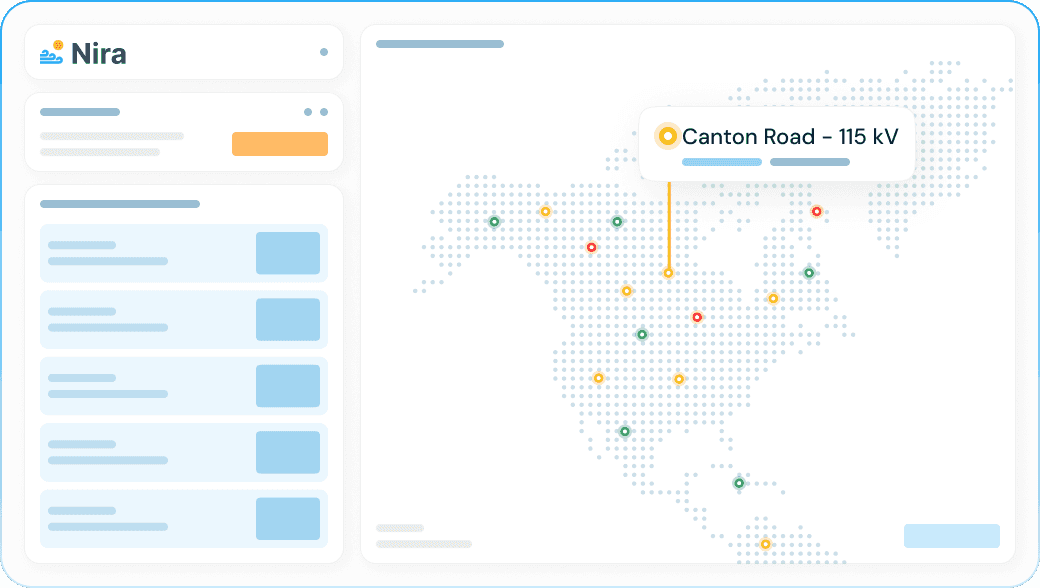
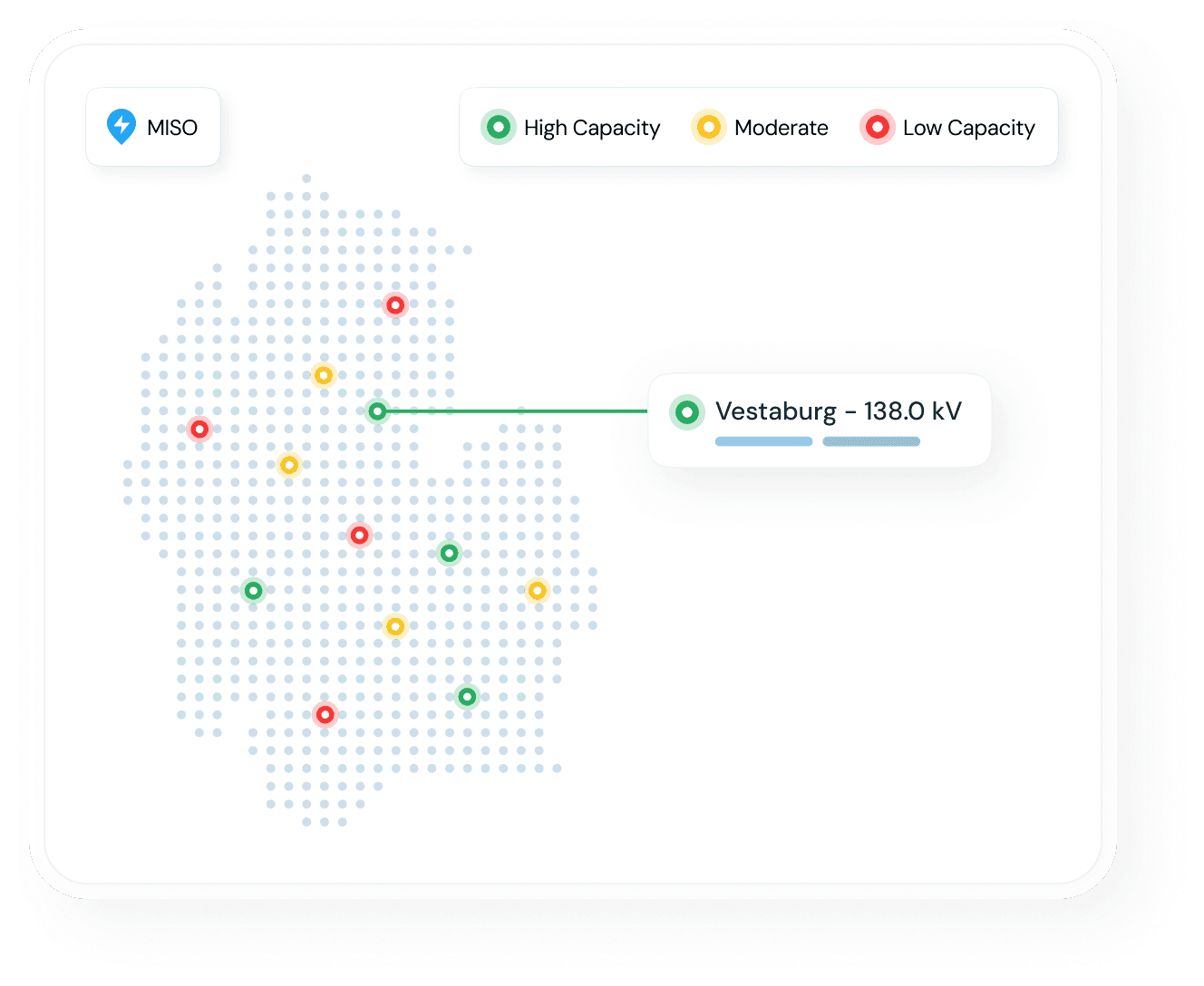
Prospecting Tool
Find viable sites faster using real-time substation capacity and upgrade cost data.

Visualize grid capacity at every ≥69 kV substation

Avoid false positives before submitting to the queue

Make confident, data-backed siting decisions
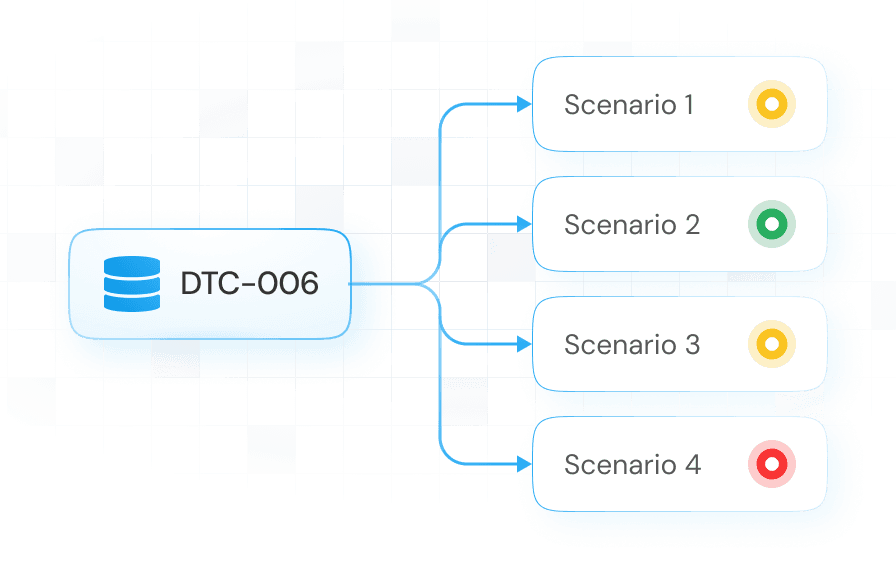
In-Queue Tool
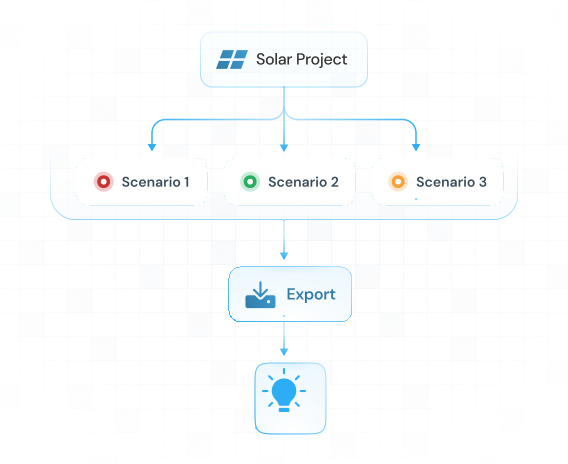
Model risks, forecast upgrade costs, and track portfolio performance in the queue.

Predict upgrade exposure and phase outcomes

Run 100+ scenarios in minutes, not weeks

Align capital planning with real ISO dynamics
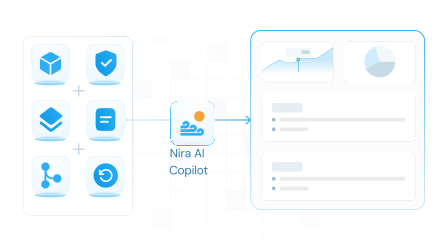
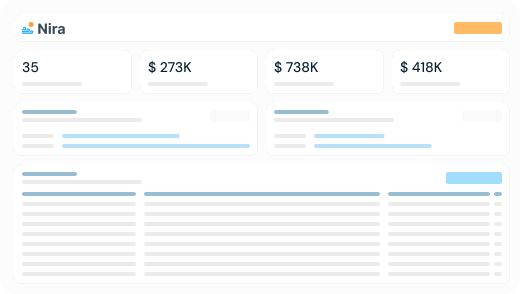
Local Studies Tool
Local Studies Tool

Deep dive into results at a shortlist of priority sites

Toggle local queue assumptions across flexible, across numerous custom scenarios

Re-runs full ISO study methodology for fast, accurate results

Compare scenarios based on knowledge of competing projects in the queue


Still have questions?
Still have questions?
How long does a subscription last?
How many users come with a subscription?
How does the subscription work?
Can we compare your data to studies we've done in the past?
What's the source of your data?

© 2026 Nira, Inc · All Rights reserved
Privacy policy
© 2026 Nira, Inc · All Rights reserved
Privacy policy
© 2026 Nira, Inc · All Rights reserved
Privacy policy